

Basics of Heat Transfer in FRP Cooling Towers
Key parameters for heat transfer in FRP cooling towers: range/approach, airflow, fill efficiency, and quick troubleshooting.
Heat transfer performance depends on airflow, fill efficiency, and stable water distribution. This article summarizes key metrics (range/approach), common site issues, and quick troubleshooting tips.
Core Metrics
Range
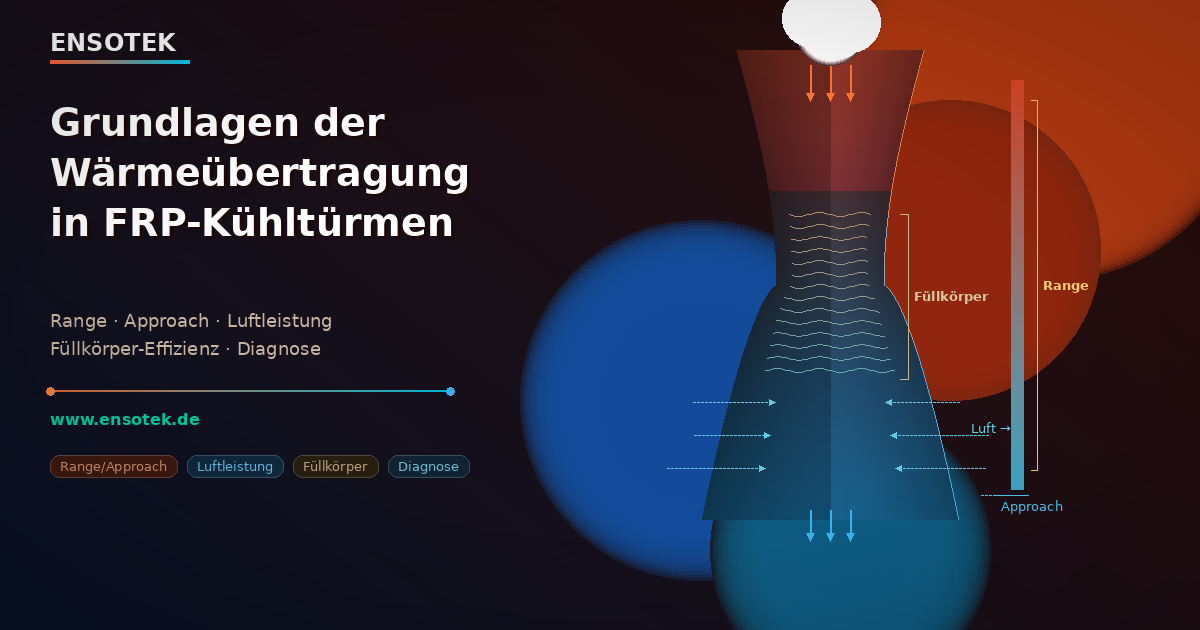
Difference between inlet and outlet water temperature. Indicates load and capacity utilization.
Approach
Difference between outlet water temperature and wet-bulb. Lower approach typically means better performance.
1) Airflow
- Fan speed (VFD), blade angle and surface condition
- Blockage at air inlets and louver condition
- Recirculation and short-circuit airflow
2) Fill Efficiency
- Surface area and contact time
- Scaling and biofouling
- Fouling due to inconsistent water treatment
Quick Troubleshooting
| Symptom | Likely cause | Check |
|---|---|---|
| Approach increases | Fouled fill / low airflow | Fill/nozzles + fan current |
| Range decreases | Load/flow change | Flow measurement + process |
| More droplet carryover | Damaged drift eliminator | Eliminator inspection |
Practical Tip
Track trends: at similar wet-bulb conditions, record approach/range and fan energy. Deviations are early-warning signals.
0 Comments
Leave a Comment